Features

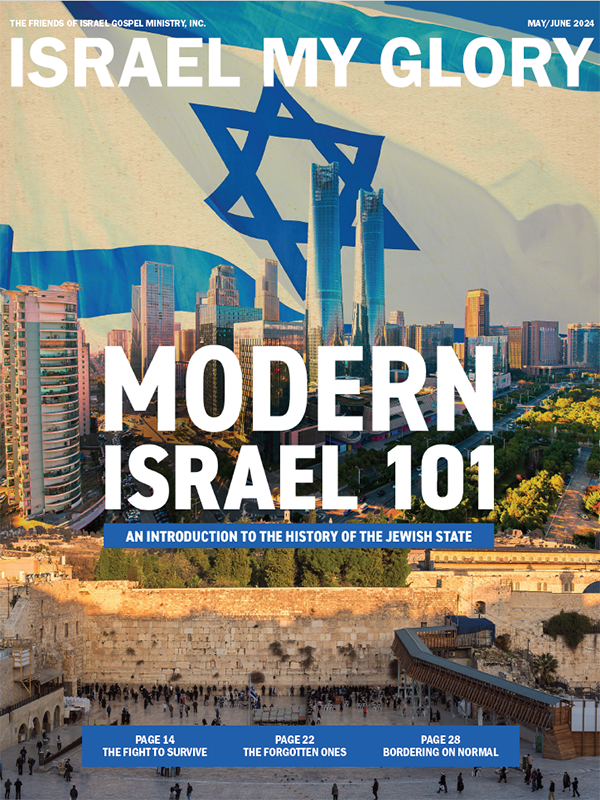
From the Editor May/Jun 2024
Ever since God promised the land of Israel to the descendants of Abraham, Isaac, and Jacob nearly 4,000 years ago, a yearning to live in this Holy Land...

Conquering our Kvetching
My beloved mother was a five-star kvetch. This Yiddish term describes a habitual complainer—and my mother was...
The Fight to Survive
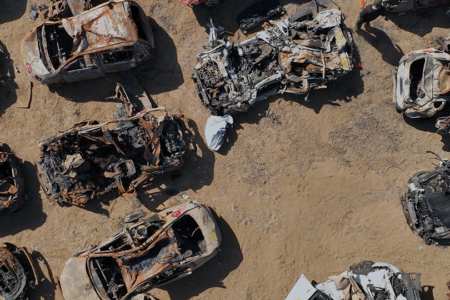
From Egypt’s Pharaoh to Persia’s Haman to Germany’s Hitler, many a world leader has attempted to destroy the Jewish people, defying God’s declaration...
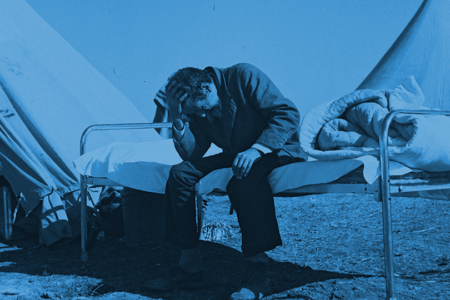
The Forgotten Ones
As of June 2023, according to the United Nations (UN) High Commissioner for Refugees, the world has 108.4 million displaced people...
Israel’s Never-Ending Struggle
The Arab-Israeli conflict is often perceived as a highly intricate issue involving a multitude of historical, political, and social elements...
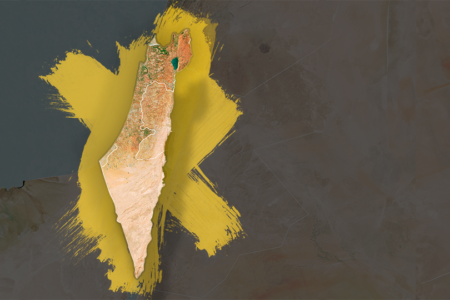
Bordering on Normal
Israel is bordered by Lebanon and Syria in the north, Jordan in the east, the Mediterranean Sea in the west, and Egypt in the south. No map, however, conveys the...


More In This Issue

Inside View May/Jun 2024
Hamas’s brutal attack on Israel last October and the subsequent war exposed the current global rise of antisemitism. Protesters justified Hamas’s massacre...

Cease the Ceasefire Talks
Shortly after Hamas’s brutal October 7, 2023, massacre in Israel, U.S. President Joe Biden demonstrated solidarity with the...
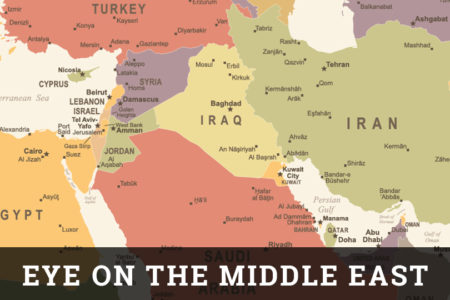
The Return of the Two-State Solution
It’s back. Hamas’s October 7 slaughter of more than 1,200 Israelis and Israel’s military response to the slaughter have revived...

The Friends of Israel in Action May/Jun 2024
In November, as one of the final phases of our Friends of Israel (FOI) Equip internship program, five FOI interns...

The Battle to Define Antisemitism
If we were to title the last 10 years of American cultural history, we might dub them “The Age of Redefinition.”...

Can a Christian’s Name Be Erased From the Book of Life?
In Revelation 3:5, the apostle John wrote, “He who overcomes shall be...

The Million-Dollar Question
Israel is always at the center of conflict. Will there ever be true peace—shalom—in the Middle East?..

Is the Book of Judges Really History? (Conclusion)
The book of Judges’ historicity is crucial in determining the validity of Israel’s...
Paul’s Testimony
Contending for the faith is not easy. It’s an unpopular, perilous, thankless job. It is more pleasant to be an appeaser than an opposer...

When the Walk Becomes a Crawl
Who among us hasn’t experienced both the mountaintops and gullies of life? Sometimes we know unspeakable joy, and other...

Jewish World Update May/Jun 2024
The United Nations Relief and Works Agency for Palestine Refugees in the Near East (UNRWA) has come under intense...

Apples of Gold May/Jun 2024
My Arab neighbors often come to my home to speak about spiritual matters. When they cannot answer my questions, they tell me they will...
Daily News from Israel
News Digest — 4/19/24
According to reports Israel’s retaliatory attack on...
News Digest — 4/18/24
The IDF killed a senior Hamas intelligence officer in an overnight strike on a terrorist cell in the central...
Israel Alone Will Choose Its Iran Response
Prime Minister Benjamin Netanyahu announced that Israel will decide for itself how to respond to Iran’s unprecedented attack...
News Digest — 4/17/24
The Israeli military and Lebanon’s Hezbollah exchanged fire on Tuesday (16th), with the terror group launching...
Middle Eastern Countries Coming to Israel’s Defense?
In an unprecedented attack against Israel, Iran directly launched 300 drones and missiles over the weekend...
News Digest — 4/16/24
Four IDF soldiers were wounded, one of them seriously, in a blast that occurred as troops operated several hundred meters inside...
Israel at War: Week 27
Early on Sunday morning (April 14, 2024), Iran launched a barrage of 300 missiles, drones, and rockets at Israel...
News Digest — 4/15/24
Israel’s airspace reopened on Sunday morning (14th) following an unprecedented direct attack by Iran during the overnight hours that saw...